|
Stephen Lee
Hi there! I'm a recent graduate from the Master's of Engineering program at UC Berkeley, where
I did a Visual Computing and Computer Graphics concentration in the department of Computer Science.
I'm a sersatile Software Engineer generalist with a technical background spanning enterprise web applications, low-level systems and embedded hardware, and high-performance GPU computing. Experienced in end-to-end feature ownership within Agile/Scrum environments, designing relational database architectures, building cloud-native applications, and developing production software across the full stack. Strong collaborator and technical communicator with experience translating complex requirements into scalable, maintainable systems.
I'm currently looking for a full-time position as a Software Engineer or Product Manager, where I can
pursue my interests and deliver high-quality products to people who can enjoy them!
|

|
|
|
Jack of All Waters
Stephen Lee,
Jeremy Fischer,
Shiran Yuan,
Nicholas Jean
project page /
video
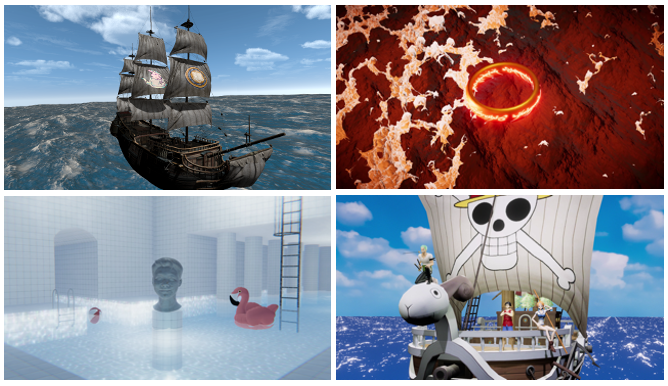
- Developed a real-time water simulation in Unity featuring procedural waves, physically inspired buoyancy, and dynamic lighting effects.
- Engineered custom GPU shaders to simulate water reflections, refractions, caustics, and underwater fog in real time.
- Optimized real-time rendering of water and lighting effects for interactive performance within Unity.
|
|
|
Optimizing Ray-Marching using CUDA for Volumetric Rendering
Stephen Lee,
Jeremy Fischer,
Samuel Sovi
project page
- Engineered a high-performance parallel ray-tracer utilizing a custom ray-marching algorithm to simulate accurate lighting and translucent volumetric material rendering.
- Optimized GPU memory management and thread execution layouts by implementing Bounding Volume Hierarchies (BVH), significantly reducing rendering latency and acceleration structure traversal times.
|
|
|
Simulating Wildfire Spread Using Physically Accurate Models
Stephen Lee,
Anthony Mansur,
Lindsay Smith
project page /
code
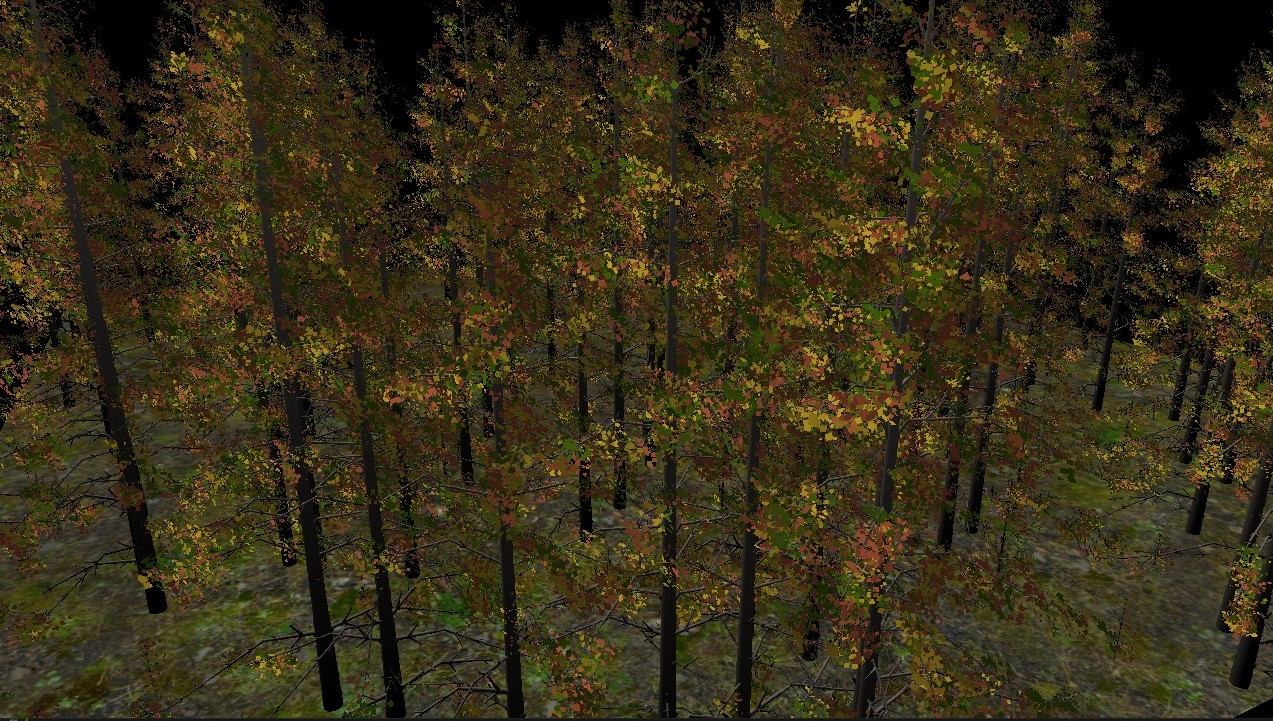
- Developed a real-time physically accurate wildfire simulation offloading intensive environmental computation to the GPU via C++/CUDA and rendering scenes dynamically in OpenGL.
- Implemented a GPU-accelerated fluid solver based on the Navier-Stokes equations to model complex thermodynamic and atmospheric fluid dynamics.
|
|
|
Drones for Fast, Low-Cost 3D Large Photorealistic Indoor Scene Reconstruction
Stephen Lee,
Shiran Yuan,
May Liu,
Brayton Lordianto,
Junming Chen
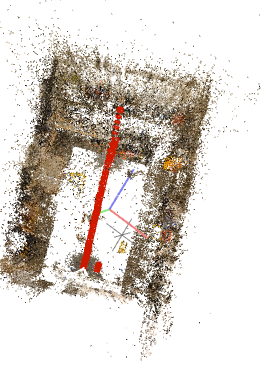
- Building off of previous work we reconstructed photorealistic indoor environments from drone-mounted 360° video streams utilizing COLMAP for structure-from-motion (SfM) estimation and 3D Gaussian Splatting.
- Co-authored a custom frame-splitting algorithm utilizing randomized rotations to improve novel-view synthesis consistency and eliminate rendering artifacts in low-texture zones.
|
|
|
Steering Semantic Data Processing With DocWrangler
Shreya Shankar,
Bhavya Chopra,
Mawil Hasan,
Stephen Lee
paper
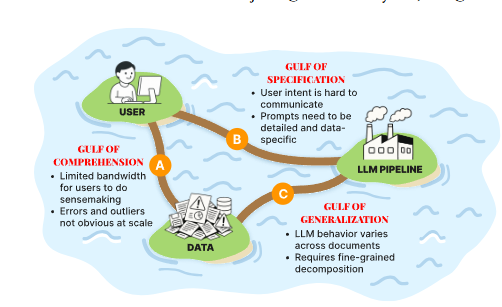
- Contributed to a mixed-initiative integrated development environment (IDE) optimized for orchestrating and managing semantic data processing workflows on unstructured text via Large Language Models.
- Designed and executed a user study evaluating prompt engineering methodologies, analyzing human-AI interaction patterns to refine UI/UX paradigms for developer tools.
|

|
Software Engineer Intern | 2026-Present
Engineering Team, Rockville MD
- Owned end-to-end development of a device maintenance and autonomy governance module, scaling features from relational database architecture to responsive frontend user interfaces.
- Redesigned device-to-task assignment logic using compliance controls as an intermediate data model, preserving historical governance data while integrating with existing legacy infrastructure.
- Automated technician workflows by engineering a relational data pipeline where assigning a device to a technician automatically maps and transfers all dependent maintenance tasks via underlying control associations.
- Engineered robust data access layers using Entity Framework Core (EF Core) to optimize communication and state management between the ASP.NET Core API and a PostgreSQL database.
- Developed an administrative team dashboard featuring dynamic data visualization graphs to track system health and aggregate cross-team task distribution by individual responsibility.
- Implemented Role-Based Access Control (RBAC) patterns in Angular to conditionally render specific interface screens and data subsets tailored to distinct user personas (technicians vs. administrators).
- Collaborated within an Agile/Scrum framework, utilizing Azure DevOps to manage sprint backlogs, conduct code reviews, and automate CI/CD deployment pipelines.
|

|
Software Development Engineer | 2022–2023
Caracara Chat Tech Team, Seattle WA
- Developed and enhanced features for a high-concurrency internal web application to optimize customer service workflows, reducing contact-handling friction and streamlining real-time agent operations.
- Engineered test-driven (TDD) data aggregation services using Java, improving data consistency and accelerating data retrieval pipelines for downstream applications.
- Designed and integrated scalable GraphQL APIs to unify communication and data transport between backend microservices and frontend user interfaces.
- Extended existing cloud-native infrastructure on AWS to support new features, maintaining reliable application hosting, secure data aggregation, and scalable environments.
- Led accessibility compliance initiatives (WCAG), implementing semantic HTML and ARIA attributes to optimize application workflows for screen-reader users and assistive technologies.
|

|
Head Teaching Assistant | 2021–2022
Introduction to Computer Systems, University of Pennsylvania PA
- Led and coordinated a team of 10 Teaching Assistants, managing weekly workflows, grading pipelines, and operational delivery to ensure seamless course execution for 200+ students.
- Designed and delivered weekly technical recitation lectures, translating complex, low-level concepts—ranging from hardware digital logic to assembly language and procedural C programming—into accessible curriculum modules.
- Mentored and code-reviewed foundational projects, troubleshooting low-level memory management, pointer manipulation, and hardware-software abstractions to accelerate student technical proficiency.
- Facilitated cross-functional alignment between the student body, the TA cohort, and university faculty, serving as the primary point of contact to resolve operational bottlenecks and optimize grading rubrics.
|
|
|
Rasterizer
project page
In this project we begin by building up a rasterization pipeline. From there, we branch out to implement a wide variety of features to make this more rich such as transforms and texture mapping. We further implement features to combat aliasing effects in these scenes such as supersampling, pixel sampling, and level sampling.
|
|
|
Gemotric Modeling
project page
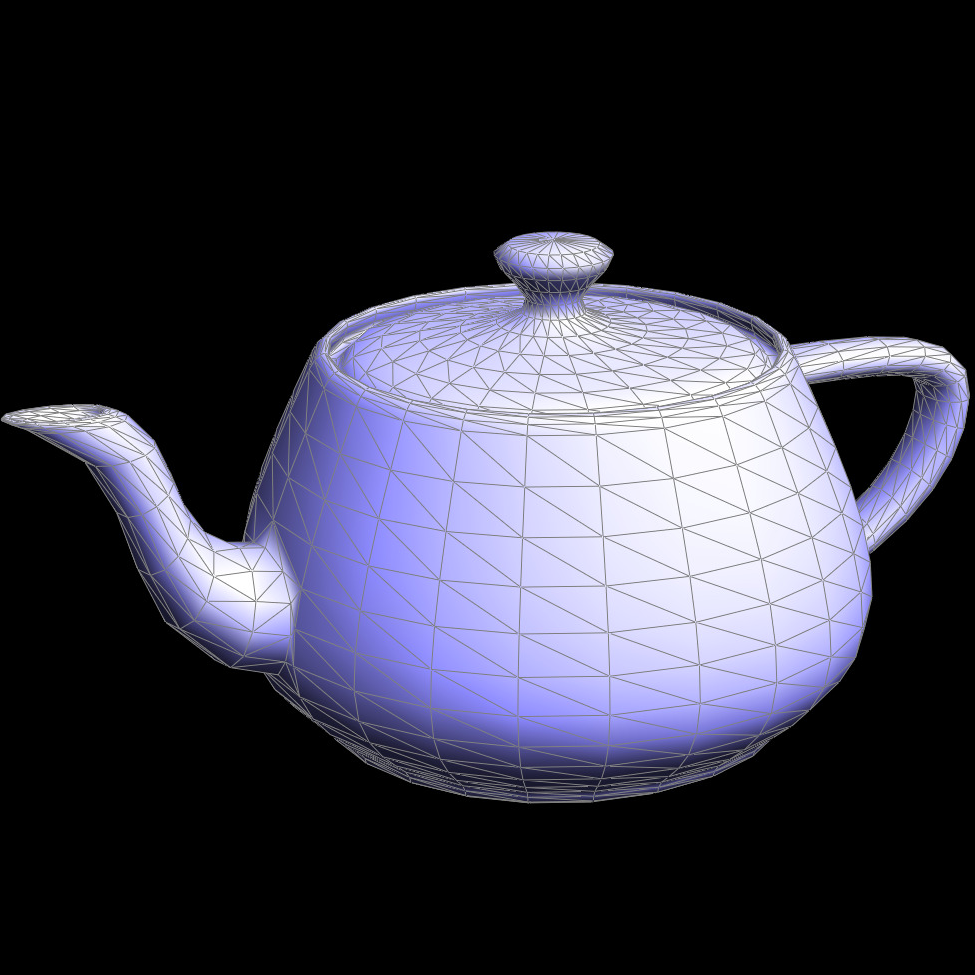
In this project we focused on geometric modelling methods that we discussed during lecture, particularly Bezeier curves and surfaces using the de Casteljau algorithm, and manipulating half-edge meshes culminating in Loop subdivision of meshes.
|
|
|
Path Tracing
project page
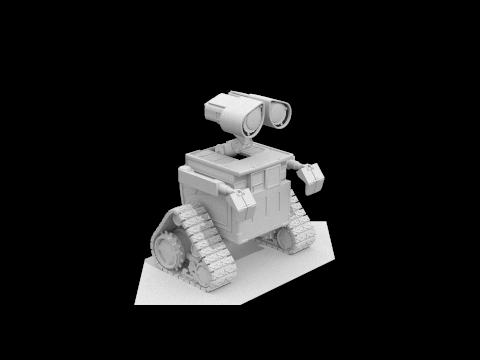
In this project, we implemented a path tracer to render scenes with realistic, physically accurate lighting. This computation is very expensive, so we implemented methods like BVH and adaptive sampling to speed up our rendering. We tried various sampling methods and implemented global illumination to better capture lighting details.
|
|
|
Cloth Simulation
project page
In this project we implemented a classic cloth simulation using point masses and springs to represent our cloth. By representing our cloth in this way, we can use physically-based methods to compute how our cloth should behave as it interacts with gravity, other objects, and itself. Finally we implement some shaders to bring our cloth to life in real time!
|
|